The Thermal Envelope: The Invisible Architecture of a Comfortable Home
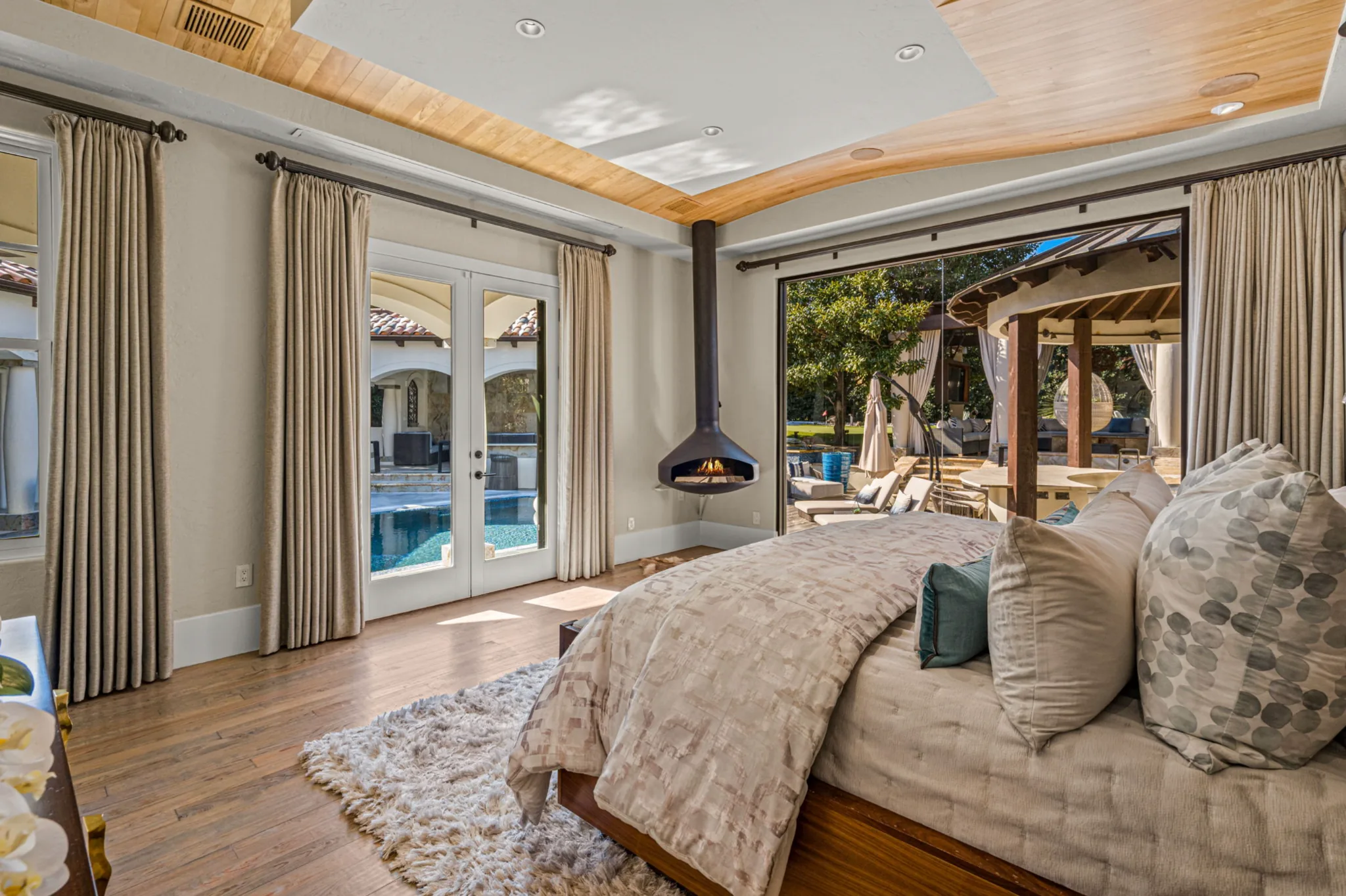
Most architectural photography captures a home at its most flattering. Stone meets glass, ceilings lift, the light arrives where it was supposed to. What the camera never captures is the layer that decides whether that home will still feel that way in August, in February, and a decade after the closing photographs were taken. That layer is the thermal envelope, and it is the most undervalued architectural decision in residential construction.
A thermal envelope is the continuous boundary between a home's conditioned interior and the world outside it. It includes the foundation, the walls, the roof, the windows, and every penetration between them. Its job is to manage four flows — heat, air, water, and vapor — across that boundary in the right direction and the right quantity. When the envelope is correct, the home feels effortless. When it is not, the home spends its life fighting the climate, and the owner pays for that fight every month.
The four control layers, in plain language
Building-science literature describes four control layers that any wall, floor, or roof assembly has to manage. The Whole Building Design Guide's moisture management resource walks through them in detail. In a luxury home in North Texas, the priorities run in this order.
Water control. Bulk water from rain, snow, and wind-driven storms has to be deflected, drained, and dried before it ever reaches the structure. The 4-D framework — deflection, drainage, drying, durability — is the working language of envelope design.
Air control. Air carries far more moisture than vapor diffusion ever will. A continuous, deliberate air barrier is the single highest-leverage decision in the entire assembly. It keeps humid outdoor air out, conditioned indoor air in, and pollutants in their lanes.
Vapor control. In a hot-humid climate like Dallas, vapor mostly wants to move from the outside in for most of the year. The vapor strategy has to allow drying without allowing wetting — which is why hot-humid climate detailing differs significantly from cold-climate detailing.
Thermal control. Continuous insulation across the framing, sized to climate zone and assembly type, keeps the conditioned interior at the temperature the mechanical system is asking it to be. ASHRAE 90.1 is the working reference for continuous insulation; high-performance residential work typically goes well beyond code minimums.
The four layers are not independent. Done well, they reinforce each other. Done poorly, one undermines the next.
What "continuous" actually means
The most common envelope failure in luxury new construction is not a missing material — it is a discontinuous one. Insulation that stops at a beam, an air barrier that does not lap over the foundation, a flashing detail that breaks at a transition. The thermal envelope is only as strong as its weakest interruption.
That is why continuous insulation has become the working standard in serious work. The ASHRAE 90.1 definition is unambiguous: insulation that is continuous across all structural members without thermal bridges other than fasteners. In practice, that means exterior insulation outboard of the framing, taped sheathing or fluid-applied weather-resistive barriers, and detailing that respects every transition between assemblies.
Why North Texas is a demanding climate
DFW lives in mixed-humid-to-hot-humid climate territory. Summer humidity is significant. Storms are intense. Winter cold snaps can be sharp and brief. Expansive clay soils move. The envelope strategy that works here has to do four things at once — keep heat out, keep humidity out, let assemblies dry inward during winter, and accommodate seasonal movement at every transition.
Compounding the technical challenge, a great deal of older Dallas housing stock was built before continuous insulation, modern air sealing, and contemporary moisture detailing were widely understood. That is the gap a thoughtful renovation can close, often dramatically.
Why the envelope shows up everywhere else
The envelope decision touches almost every other line item in a luxury home. A correctly designed envelope means smaller, quieter mechanical equipment. Smaller equipment means smaller chases, simpler ceiling planes, and more architectural freedom. Tighter assemblies mean filtration and ventilation actually work as designed. Continuous insulation means warm walls in winter and dry walls in summer, which means longer-lived finishes and less callback maintenance.
The envelope is also where a building falls into or out of the comfort zone. Cold spots near windows, hot rooms over garages, condensation at returns, sticky air at 78 degrees — almost all of these problems trace back to envelope decisions made (or skipped) in framing.
How the envelope shows up in cost — and why owners eventually thank it
The envelope upgrade is one of those line items that reads as expensive on the spreadsheet and modest in the lived experience. Continuous exterior insulation, fluid-applied membranes, high-performance windows, and the disciplined detailing required to make them all work together usually add a single-digit percentage to the total cost of a new luxury home. Over the home's first decade, that increment routinely pays back through lower energy use, smaller mechanical equipment, less maintenance, and the harder-to-quantify dividend of a home that does not feel like work.
The ENERGY STAR program's Thermal Enclosure System Rater Checklist gives a useful baseline for the language and the inspection cadence. High-performance residential teams typically run their own checklist against the same physics, with site-verified blower-door numbers as the closing artifact.
How the work gets done
The most reliable way to put a high-performance envelope into a finished home is to write it into the brief at the start. Architect, mechanical engineer, and builder are at the same table, working against the same drawing set, with envelope details resolved before structural steel orders go out. That is the structural advantage of a design-build practice — fewer seams, fewer interpretations, fewer surprises in the field.
Renovations face a different challenge but a familiar opportunity. Whenever a wall is open, the cost of upgrading the envelope is dramatically lower than at any other moment in the home's life. A whole-home renovation that does not use the open-wall window to bring the thermal envelope into this decade is a renovation that will likely be redone.
Common myths about high-performance envelopes
A few persistent myths slow envelope adoption in the luxury market. The first is that a tight house cannot breathe. In fact the opposite is true — a tight house breathes deliberately, through balanced mechanical ventilation that the design team can specify and the owner can rely on, rather than randomly through leaks. The second is that continuous insulation only matters in cold climates. In a hot-humid Dallas climate it is arguably more valuable, because it keeps the back side of interior finishes warm enough in summer to prevent condensation on the inside of impermeable wall finishes. The third is that a high-performance envelope locks the home into an austere aesthetic. There is no aesthetic constraint at all — stone, brick, plaster, wood siding, and large expanses of glass all coexist comfortably with a properly designed thermal envelope. The discipline lives behind the cladding, not in front of it.
The envelope will never appear in the listing photos. It will define what living in the home actually feels like. That is the trade.
Plan the next chapter of your home
A luxury home is best understood as an asset — one that rewards careful design upstream and disciplined stewardship for decades after move-in. If you are weighing a renovation, a new build, or a long-horizon maintenance plan for a property in Dallas, Fort Worth, or the wider DFW metroplex, start with a private design-build consultation. We take on a small number of clients each year, and the most rewarding projects begin with a quiet conversation long before drawings begin. See how this thinking shows up in finished work across our portfolio.
Sources
- Whole Building Design Guide — Moisture Management Strategies. https://www.wbdg.org/resources/moisture-management-strategies
- Building Science Corporation — Moisture Control for Buildings (Joseph Lstiburek). https://buildingscience.com/sites/default/files/migrate/pdf/PA_Moisture_Control_ASHRAE_Lstiburek.pdf
- ASHRAE Standard 90.1 — Energy Standard for Sites and Buildings. https://www.ashrae.org/technical-resources/bookstore/standard-90-1
- U.S. Department of Energy — Building America Solution Center, hot-humid climate. https://basc.pnnl.gov/